The City of Jacksonville Building Inspection Division's residential permits page, checked in November 2026, says work started without a required permit can bring a $250 fine on top of the permit fee. It is one of several local rules worth knowing before you hire a general contractor in Jacksonville, FL. The others come from Florida law and from the City's own contractor licensing board.
A general contractor runs a whole project: framing, drywall, trim, and the trade subcontractors such as electricians and plumbers. That makes the hire bigger than any single trade, with more to check before you sign.
General contractor Jacksonville FL: the license checks
Florida licenses general contractors through the Department of Business and Professional Regulation (DBPR). There are three main levels under Florida Statutes Chapter 489:
- Certified general contractor, the broadest license.
- Certified building contractor, for commercial buildings up to three stories and residential buildings.
- Certified residential contractor, for one-, two-, and three-family homes up to two stories.
Look up the license on the DBPR site and check that it is active and that the name matches the company on the contract.
Jacksonville also has its own Construction Trades Qualifying Board under City Ordinance Code Chapter 342. It issues local certificates of competency for some specialty trades. If a contractor tells you they hold a local Jacksonville license instead of a state one, ask what trade it covers and confirm it with the City.
What else to check before you sign with a general contractor in Jacksonville, FL
- Insurance. Ask for general liability insurance and workers' compensation coverage, and call the agent to confirm both are active.
- Permits. The contractor should pull the permit in their own name. If you are asked to pull an owner-builder permit for a contractor's job, stop. The City's residential permits page explains that owner-builders take responsibility for the work and must do it themselves.
- Lien law. Florida Statutes Section 713.02(5) exempts improvements of $2,500 or less from the construction lien law. Above that, a notice of commencement and lien releases from subs and suppliers protect you from paying twice.
- A written contract with scope, start and finish dates, change order process, and phases of payment.
How to hire a general contractor in Jacksonville step by step
Step 1: Define the project
Write down what you want built or changed. Add photos, sketches, and any plans you already have.
Step 2: Check licenses and insurance
Look up each contractor on DBPR and confirm insurance with the agent before you invite them to bid.
Step 3: Get written bids for the same scope
Ask at least three licensed contractors to bid the same plans and scope. Compare line items, schedules, and allowances.
Step 4: Confirm who pulls the permit
Put in the contract that the contractor pulls the permit and passes all inspections.
Step 5: Set phases and lien releases
Agree on payment phases tied to work you can see, such as rough-in inspection passed, drywall hung, and final inspection passed. Ask for lien releases with each payment.
Step 6: Close out with the final inspection
Do not make the last payment until the final inspection passes and you have final lien releases.
Worked example: a hypothetical room addition in San Marco
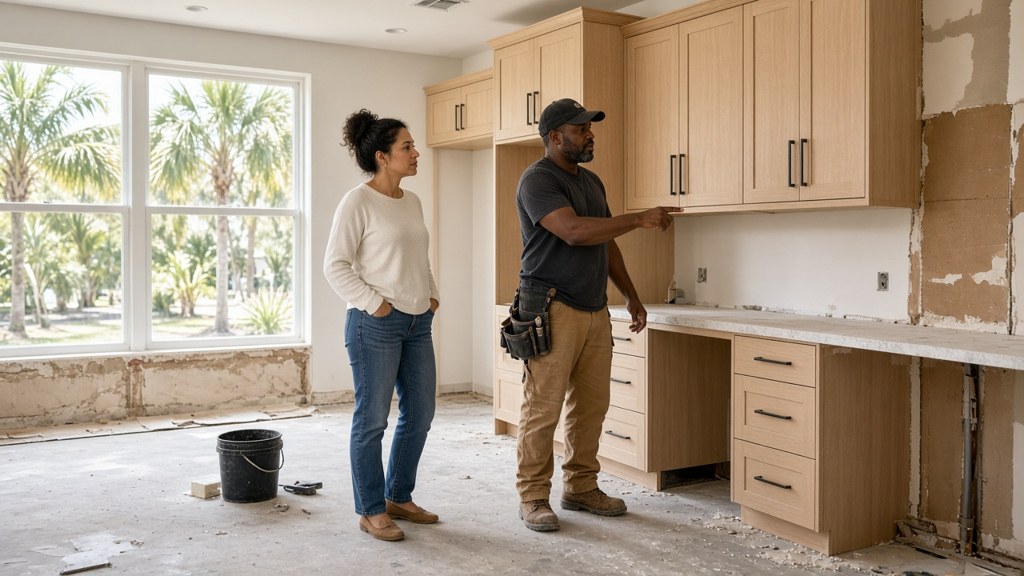
This is a hypothetical example, not a real customer. A couple in San Marco want a 300-square-foot family room added to their 1950s home. They ask three licensed contractors to bid from the same plans.
One bidder holds no state license and suggests the couple pull an owner-builder permit. They cross that bidder off. The other two hold active DBPR licenses and current insurance. The couple choose the bid with clear phases, permit in the contractor's name, and lien releases with each payment.
Common mistakes
- Pulling an owner-builder permit for work a contractor is doing.
- Not checking the license level against the size of the job.
- Paying a large deposit before any work or materials show up.
- Skipping lien releases on a job over $2,500.
- Making the last payment before the final inspection passes.
Frequently Asked Questions
How do I check a general contractor's license in Jacksonville, FL?
Search the contractor's name or license number on the Florida DBPR licensing portal and check that the license is active and matches the company on your contract.
What happens if work starts without a permit in Jacksonville?
The City of Jacksonville Building Inspection Division says work started without a required permit can bring a $250 fine on top of the permit fee, plus the cost of fixing anything that fails inspection.
What is the difference between a general and a residential contractor in Florida?
A certified residential contractor can build and remodel one-, two-, and three-family homes up to two stories. A certified general contractor can work on any size building.
Should a general contractor give me lien releases?
Yes. On jobs over $2,500, ask for lien releases from the contractor, subcontractors, and suppliers with each payment so you do not pay twice.
So let me ask you something
You're a homeowner in Jacksonville, and you are planning a remodel or addition that needs a general contractor. The steps above help you hire with care. They still leave two questions most people ask too late.
How do you know the general contractor you hire is insured and will finish the work? And how much will you be asked to pay before anyone has done anything you can see?
If you're like most homeowners I talk to, you have heard the stories. A low bid that looked like a deal. A large deposit paid before the first day of work. A general contractor who stopped answering once the money moved.
Paying too much too soon. Hiring someone you cannot check. Getting stuck with unfinished work. Those are the risks worth taking off your plate.
What if none of that applied anymore?
Picture this. You open a phone app, describe the remodel job, and add a few photos. It is free to download, and it is free to post your job. No credit card required.
Insured pros send you written quotes. You compare what each one will do, then accept a final quote. When you accept the final quote, the money moves from your account and is kept safe. It is only released when the job is complete, or when a phase you both agreed on is complete.
The app has a free CRM built in, so your project, quotes, and messages live in one place on your phone. You can approve each phase after the inspection passes, and keep the permit, photos, and messages with the job.
That app exists. It was built for Florida homeowners, and posting your job costs nothing.
It's called UGO PROS
UGO PROS is a free app for your phone. It is free to download, and it is free to post your job. You can use the built-in CRM free. No credit card required.
UGO PROS is a two-sided home services marketplace that connects homeowners with verified pros, the contractors who have passed UGO PROS verification. The company currently operates throughout Florida. UGO PROS verifies each contractor's insurance and any license Florida requires before the contractor can accept a project, and it keeps a timestamped record of the messages, photos, and approvals on every project.
Restoring trust. Protecting both parties.
Post the remodel job with photos, compare verified pros, and accept a final quote in the app. Bidding is free. UGO PROS only takes a tiny fee when the job is funded.
When you accept the final quote, the money moves from your account to ours, where it's kept safe. It's only released when the job is complete, or when a phase you both agreed on is complete. We hold your funds safely so you never get scammed again.
UGO PROS is currently interviewing affiliates. If you like how the app works, you can earn up to 30% lifetime commissions by referring friends and family through the Ambassador Program.
More reading for Jacksonville homeowners: the step-by-step guide to hiring a contractor in Florida, Florida contractor deposit law, how much to pay a contractor up front, what DBPR data shows on unlicensed contractor complaints, how to hire kitchen remodel contractors in Florida, and the complete 2026 guide to hiring a contractor in Florida.
Download the free UGO PROS app, then post your job for free and compare pre-quotes from verified pros: ugopros.com/join/Jaxnow.
Written by Jason Jones, Founder of UGO PROS.
Published November 25, 2026. Last updated November 25, 2026.
Jason Jones is the Founder of UGO PROS, a Florida home services marketplace app that connects homeowners with verified pros. UGO PROS verifies each pro's insurance and any license Florida requires, and most verified pros on the platform today are based in Jacksonville.
Disclosure: I am the founder of UGO PROS, the Florida home services marketplace described in this article.
Sources
- City of Jacksonville Building Inspection Division, Residential Permits, checked November 2026: https://www.jacksonville.gov/departments/public-works/building-inspection-division/commercial-permits/residential-permits
- Florida Statutes, Chapter 489, Part I (Construction Contracting), 2026, The Florida Senate
- Florida Statutes, Section 713.02(5), 2026, The Florida Senate
- City of Jacksonville Ordinance Code, Chapter 342 (Construction Trades Regulations), Construction Trades Qualifying Board, checked November 2026
- Florida Department of Business and Professional Regulation, license search, checked November 2026
- The pages above were checked on November 25, 2026, for this general contractor Jacksonville FL guide.